The Cricket Bat’s Flat Face: A Shape with a Purpose
Understand the cricket bat’s flat face and shaped blade, and see how each suits a different kind of contact, shot direction and playing situation.
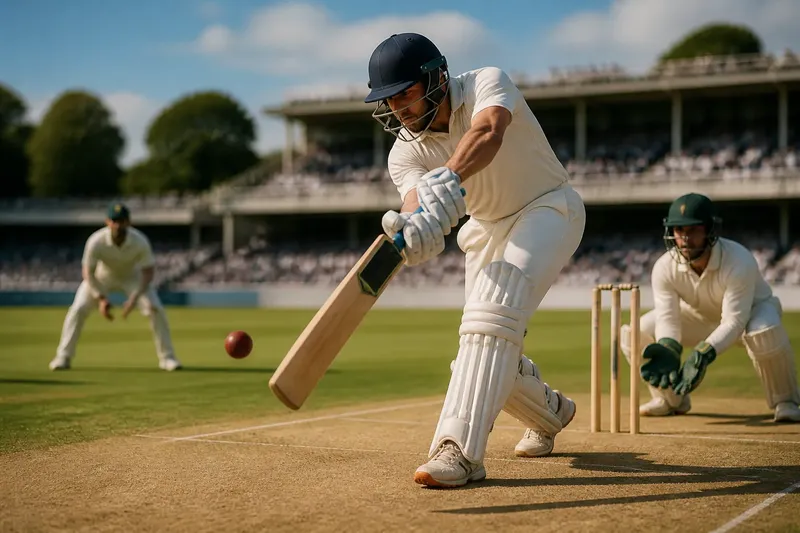
The cricket bat’s flat face gives a batter a broad, relatively even surface for meeting the ball, while the shaped blade puts useful wood behind that surface. Together, these features help explain why a straight defensive stroke feels different from a cut or a glance, even though the same bat makes both possible.
It helps to read the bat as a tool for managing contact, not as a flat plank. Its face, edges, spine and curved back each contribute to how a batter can meet the ball and send it towards a chosen part of the field.
What does the flat face do?
The broad face gives the batter a clear surface to present towards an incoming ball. On a straight defensive stroke, the face can be angled towards the ground so the ball drops nearby; on a drive, the batter swings through the line and directs contact more towards the intended target.
That does not mean the ball always travels exactly where the face points. The angle of contact, swing path, timing and the ball’s pace all affect the result. Still, the face is a useful reference: turning it changes the likely direction of a cleanly struck ball.
The face is not perfectly featureless. Its slight curvature and finish help form the blade, and the hitting area is broad rather than a single point. A batter therefore has room to make contact across a zone, while still aiming to meet the ball near the intended part of the blade.
Which part of the blade suits your situation?
If a ball arrives close to the line of the stumps, a batter usually wants a controlled meeting rather than a large swing. The central face, supported by the thicker spine behind it, is suited to strokes such as a straight drive or a compact defence. The intention is to keep the bat’s path and face aligned with the ball’s line.
If the ball is wide of the body, a batter may reach across or move into position to play square of the wicket. The face can then be opened or closed to help send the ball through the off side or leg side. For a cut, the hands and bat move across the body; for a glance, the face is turned to redirect the ball rather than hit it straight back.
For a ball aimed at the toes, the lower part of the blade may be involved, particularly when the batter uses a block or a sweep. For a shorter ball that is met higher up, contact may occur above the middle. The best position depends on where the ball reaches the batter and what shot is being attempted, not on a single magic spot.
The edges matter when contact is off-centre. They are narrower than the face, so a ball meeting an edge is less likely to travel along the intended line; it may fly towards a slip fielder or another nearby player. The thicker blade behind the face gives the edge some substance, but it does not turn an accidental edge into a controlled stroke.
Why is the back shaped rather than flat?
Look at the back of a bat and the raised spine running down its length. The blade is thicker through this central area and tapers towards the edges, creating a shape that supports the striking face without making the whole blade equally thick. The profile also leaves the face broad and the edges defined.
This shaping is part of how a bat balances strength, usable hitting area and handling. The face is where the batter meets the ball; the spine gives depth behind it, while the shoulders and toe complete the blade’s form. The result is a shaped piece of wood, not simply a sheet with a handle attached.
A bat’s surface may also show shallow grooves or grain lines, and the back can have a pronounced profile. These visible details do not tell you where every shot will go. For a viewer, the practical clue is simpler: the face is the presenting surface, and the raised back is part of the structure that supports it.
How does the bat shape affect a shot?
Think first about the ball’s line, then about the contact the batter needs. A straight face meeting a ball under the eyes tends to suit a controlled stroke back along the ground; an angled face meeting a ball outside the body can redirect it into a gap. The blade makes those contacts available, but the batter’s movement and timing determine how well they work.
Say you are watching an invented match situation: a right-handed batter receives a ball outside off stump and wants to send it behind square on the off side. The batter moves into line, brings the bat across, and presents an angled face at contact; the observable aim is for the ball to travel square rather than straight back towards the bowler. If the face stays aimed down the pitch, the same swing may send the ball in a different direction.
There is no need to memorise technical names for every contour. It is not worth the effort to judge a bat’s usefulness from a dramatic-looking spine or a single close-up of its edge; those features make more sense when you connect them to where the ball meets the face and how the batter shapes the stroke.
What do viewers often ask about a cricket bat’s flat face?
Why is a cricket bat flat on one side?
The broad face provides a surface for controlled contact and direction, while the shaped back supports that face. It is a practical blade profile for batting strokes played along the ground or through the air.
Does the ball have to hit the middle?
No. Batters can make contact across the blade, depending on the ball’s height, line and the shot. Contact near the centre often gives a more controlled strike, while a hit near an edge is less predictable.
Why does a bat have thick edges?
The edges are part of the blade’s shaped profile, with the spine carrying more thickness behind the face. They can be involved in contact, but a batter generally has less control when the ball meets an edge than when it meets the face.
Can the bat’s face control the ball’s direction?
The face angle helps influence direction, but it is only one part of the stroke. The bat’s path, the point of contact and the batter’s movement also shape where the ball goes.
What should you notice when watching a stroke?
Watch the relationship between the ball’s line and the face at contact. A batter who wants to defend may keep the face close to the line and bring it down firmly; one looking to steer the ball may turn the face to guide it away from the bowler.
Then notice where contact happens on the blade. A clean meeting on the face and a glancing contact near an edge can look similar from a distance, but the ball’s flight often reveals the difference. Understanding the cricket bat’s flat face this way makes the bat’s shape easier to read: the surface presents the stroke, the blade supports the contact, and the batter supplies the direction.
Next time a batter turns a ball into the leg side, look at the face just before it disappears from view. That brief angle often tells you more about the intended shot than the bat’s profile alone.