Why the Follow-On Exists in Test Cricket—and When to Enforce It
Why the follow-on exists in Test cricket, how the lead threshold works and what a captain weighs when choosing immediate pressure over a second innings.
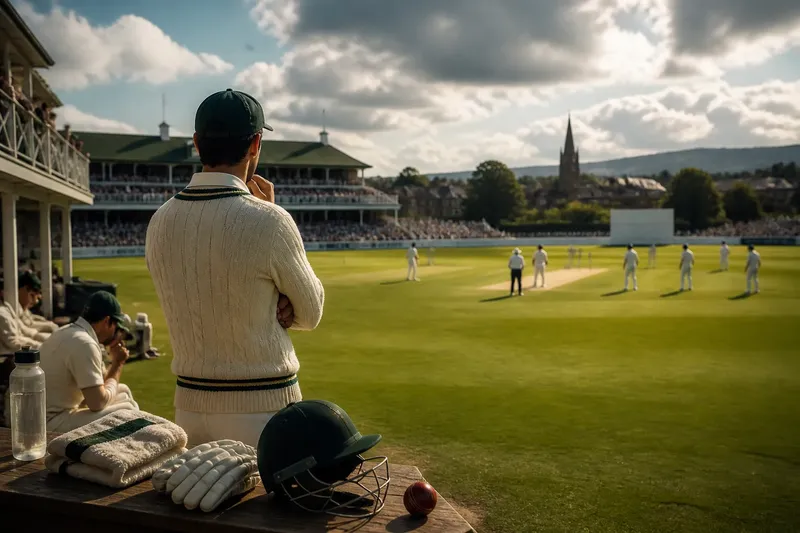
The follow-on in Test cricket lets the side with a qualifying first-innings lead ask its opponents to bat again straight away. The choice can put the opposition under pressure, but a captain may prefer to bat again and give the bowlers a rest.
That decision changes the order of play, not the result by itself. To understand it, separate the rule that makes the option available from the judgement about whether to use it.
What does the follow-on rule allow?
In a Test, each side normally has two innings. Once both first innings are complete, the side that batted first may require its opponents to begin their second innings immediately if its lead meets the applicable threshold.
For a five-day Test, the usual threshold is a lead of 200 runs; the required margin is lower in Tests scheduled for fewer days. This is an eligibility rule, not an instruction to enforce the follow-on. The precise playing conditions for a match determine the applicable threshold.
Imagine Side A makes 410 and Side B replies with 190 in a five-day Test. The hypothetical first-innings lead is 220, so Side A has the option to enforce the follow-on under the usual threshold. If Side B instead makes 215, the lead is 195, so that threshold is not met. These figures describe an invented situation, not a match result.
The captain with the option communicates the decision to the opposing captain and the umpires. If the follow-on is enforced, the side that batted first is due to bat last if the match reaches that innings.
Why might a captain enforce it?
Enforcing the follow-on removes the leading side’s second innings from the immediate schedule. That leaves more of the remaining match for bowling at the opposition, rather than adding runs first.
It can also keep pressure on a side that has just fallen well behind. Its batters must return to the crease, while the leading team can continue with the ball. That may offer an attacking opportunity, but it does not predict how the innings will unfold.
Say Side A has a qualifying lead late in the third day, and its captain judges that the surface is still helping the bowlers. If the captain enforces the follow-on, Side B begins its second innings without waiting for A to bat again. The observable change is the order of play; wickets or a win remain uncertain.
The bowlers’ workload matters too. An attack that is ready to bowl again may suit the immediate pressure of a follow-on, while bowlers who have spent a long time in the field may benefit from a break.
Why might a captain decline?
Declining the follow-on means batting again. A captain may want to extend the lead, set a larger target for the eventual chase, or give the bowling attack time away from the field.
The trade-off is time. The leading side’s extra innings uses part of the match, leaving less time to bowl out the opposition. If play is interrupted or the opposition bats for a long time, the chance to force a result may narrow.
Conditions and available players can shape the choice. A captain may think the pitch is easier for batting now, or that the bowlers need recovery; another captain may judge that the conditions favour an immediate attack. Neither choice removes risk—it changes where the risk falls.
How do the two choices change the match?
Enforcing the follow-on prioritises urgency: the leading side can send the opposition straight back in and use the remaining time to attack. Batting again prioritises adding to the lead and allowing the bowlers to rest, at the cost of time that could have been spent bowling.
Imagine Side A has a qualifying lead, its fast bowlers have worked hard, and the captain believes the pitch is becoming easier for batting. The captain chooses to bat again, hoping to add runs while the bowlers rest; Side B consequently waits longer to begin its second innings. If rain interrupts play later, the extra batting has used time that might otherwise have been available for bowling. This invented situation illustrates a trade-off, not a prediction.
In a different invented situation, Side A has a qualifying lead, rested bowlers and conditions its captain considers helpful for bowling. Enforcing the follow-on would bring Side B back to bat immediately; the decision favours an early attack over adding runs first.
What should you listen for during a broadcast?
When commentators discuss the follow-on, listen for the lead, the time left, the conditions and the bowlers’ workload. Each can help explain a captain’s choice without making it obvious which option is best.
- Lead: Check whether the first-innings margin meets the applicable threshold; if it does, the captain may enforce the follow-on, and if it does not, the side must choose another course.
- Time: Listen for how much play remains; if another innings could leave too little time to bowl the opposition out, the captain may favour an immediate attack, and if the attack needs a rest, batting again may be preferred.
- Pitch and conditions: Notice whether commentators describe conditions as favourable to batting or bowling; if they favour bowling, the captain may enforce the follow-on, and if batting appears more attractive, the captain may bat again.
- Bowling workload: Consider whether the bowlers have just completed a long spell in the field; if they seem ready to bowl, an immediate innings may appeal, and if they need recovery, batting again offers a pause.
- Batting position: Consider whether the leading side might add to its advantage; if a larger lead is the priority, it may bat again, and if time is the greater concern, it may enforce the follow-on.
- Weather: Listen for mention of possible interruptions; if lost playing time is a concern, the captain may prefer to begin bowling sooner, and if the attack needs a break, batting again may still be chosen.
These prompts are not a scoring system. A captain may weigh one more heavily because of the players available or the match situation. Trying to infer a single correct answer from the lead alone is not worth the effort: the rule creates an option, while the circumstances shape its appeal.
What questions do viewers ask about the follow-on?
Is the follow-on compulsory when a team has a big lead?
No. A qualifying lead gives the captain the option to require the opposition to bat again, but the captain may choose to bat instead. The decision depends on the match situation, not just the margin.
Does enforcing the follow-on mean the leading team has won?
No. The opposition still has an innings to play, and the leading side still has to take the wickets needed for a result. Enforcing the follow-on is a choice about the order of play, not a prediction of victory.
Why can batting again be useful if a team is already ahead?
It can enlarge the lead and give bowlers time away from the field before they bowl again. The cost is that the extra innings uses time that could otherwise be spent trying to dismiss the opposition.
Does the threshold change in a shorter Test?
Yes. The required lead depends on the match’s scheduled length, so the usual five-day threshold should not be assumed for every Test. Check the applicable playing conditions for the match.
How can you read the captain’s decision?
First check whether the lead qualifies, then notice what the captain does with the option. If the opposition is sent back in, the side is prioritising immediate pressure and time; if the leading side bats, it is choosing to add runs or give its bowlers a break.
The follow-on makes a strong first innings matter beyond the scoreboard: it can alter who bats next and how the remaining time is used. For anyone trying to understand why the follow-on exists in Test cricket, watch how urgency, rest and the clock pull the captain in different directions.
For the exact threshold and procedure in a particular match, rely on its playing conditions and the officials’ announcements. Once the option is clear, the pause before the next innings can be a useful moment to listen for which trade-off the captain has chosen.